

Since June 2020, PeerSupport.io has been working tirelessly to transform the healthcare industry. They’re tackling one of the sector’s biggest challenges: long wait times and clinician burnout. PeerSupport is reducing the administrative burden on clinicians by automating tasks like prescription fillings, notetaking, and referral forms—just to name a few. Clinics using their platform, Spotlight, have seen wait times drop by up to 27 weeks, saved over $200,000 annually, and reported a 93% reduction in administrative stress, making it a proven, scalable solution to a broken system.
With Canada’s growing aging population putting increased pressure on the healthcare system, PeerSupport has entered the healthtech market just at the right time. Over the past year, the company has seen substantial growth and recently secured their first international client, in North Carolina.
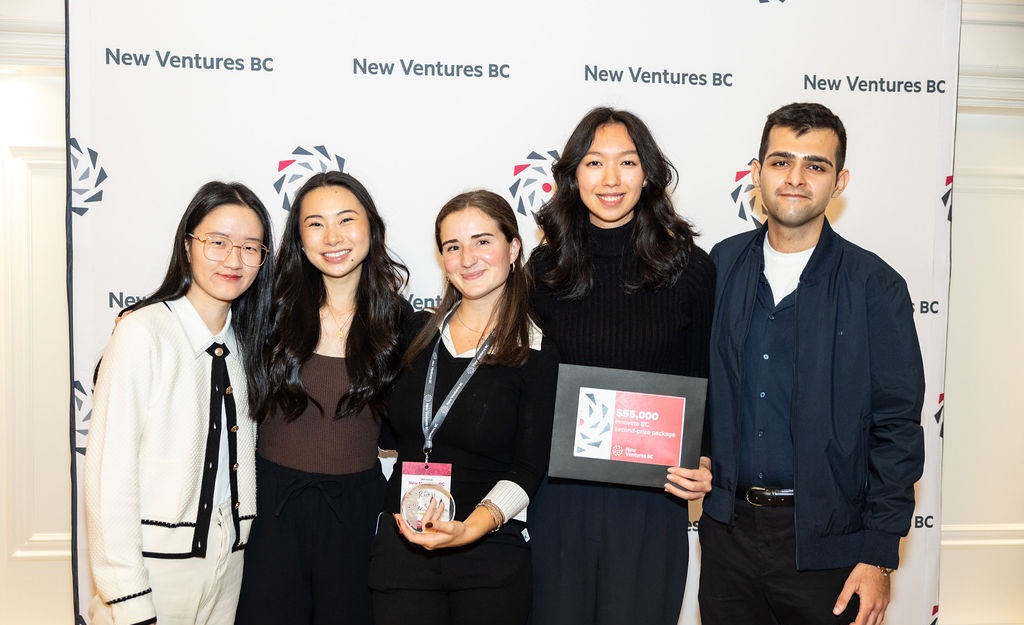
PeerSupport won the Second Place Prize in our Annual Competition last year. We caught up with CEO Chirag Jadhwani to hear about his early days building the platform, what PeerSupport has been up to since the competition, his reflections and advice for this year’s participants, and what’s next for the company.
Besides the prize, what was the most impactful part of going through the competition?
The network, without question! Going through New Ventures BC connected me with fellow founders and investors who I still talk to regularly. But, I’d also add that the process itself was very valuable. Preparing for each stage of the competition forced us to sharpen our story, pressure-test our numbers, and articulate our vision more clearly than we ever had before.
You did very well—congrats on winning second place! How did you use your prize package?
We put all of the prize towards research and development. Specifically, accelerating the build of Peer Cowork—our voice-activated browser for clinical settings. We’d been developing it through early 2025, and the prize money let us bring on additional development support to move faster.
Looking back at the competition, what was the most valuable feedback you received?
I’ll be honest, I didn’t take full advantage of the mentorship process, which is something I’d do differently if I could go back. However, the Q&A sessions with jury members made up for it. After those meetings, things really started to click. The jury asked sharp and genuine questions, and those conversations ended up being far more valuable than any pitch.
I stayed in contact with two of the jury members, and when we were raising in December, they came on as angel investors! I really enjoy working closely with my team, our investors, users, customers—and this extended to the incredible jury panel. I was quite transparent and open with everyone, because I learned that the trust you build with people is what compounds over time, and is worth far more than any product feature.
Any advice for this year’s competitors?
Charlie Munger once said: “Preparation plus opportunity equals luck.” I made over a hundred cold calls before anyone said yes to working with me. Most went unanswered. But each call sharpened my pitch, deepened my understanding of the problem, and brought me closer to the person who would eventually become our first customer. When that door finally opened—I was ready. If your competition entry doesn’t land the way you hoped, keep calling. The preparation you put into it is never wasted.
Starting a company as a student is a massive undertaking. What was it like?
Borrowing from Mark Twain, I’ve never let my school interfere with my education. My education is still ongoing even though my chapter with UBC is over. I came to Canada in my teens. I was raised by a single mother who moved heaven and earth to make sure I had the life and opportunities she didn’t have. For a kid who was the first in his family’s history to ever sit in a classroom of any kind, I feel grateful I get to wake up every morning, practice my trade, and learn.
I see building this company as part of my education, though I will say doing it during university was definitely tough. I was taking the minimum required courses each semester, attending virtually during the pandemic—while simultaneously running pilots at the Krasman Centre in Toronto. That said, I appreciated having fewer obligations. When you’re 20 and living off of ramen noodles, the downside risk of a startup is pretty low. The hardest part wasn’t the workload, it was the loneliness of building something no one else around you fully understands yet. Except, I was lucky to have a set of early users and one customer who cared as much as I did!
As you scale, what’s one thing you know now that you wish you knew back when you founded PeerSupport?
I wish I’d known earlier that the transition from solo founder to leader of a team is its own skill set—one that requires just as much intentional practice as building the product itself. I worked solo on this company for years, and now having people who rely on PeerSupport adds a tremendous sense of responsibility. What I’m actively doing to get better at this is asking for a lot of feedback from my team and my Board of Directors.
You’ve spoken about how your family member’s hospitalization sparked the idea for PeerSupport.io. During months of research in a Canadian hospital, what insights were most critical in shaping Spotlight and navigating the Canadian health-tech market?
Before I arrived at this clinic, I thought the biggest problem would be something technical; outdated systems or lack of interoperability. While those issues were real, what I actually discovered was that the deepest pain point was far more human: clinicians were spending their days on tasks that had nothing to do with patient care, and it was crushing them. That observation led to our first version of Spotlight and proved the concept—if you can take even one draining task off a clinician’s plate, the impact is immediate and visible.
That initial customer discovery taught me two things that shaped everything we’ve built since. First, you have to earn the right to innovate in healthcare. Procurement has seen plenty of tech companies swoop in with broken promises, then leave when things get hard. I spent four years running six pilots, iterating each one, before we ever tried to sell the product or raise money. That patience built trust and that is the real currency in healthtech. Secondly, I learned to be radically transparent about what AI can and can’t do. Clinicians don’t want to hear that your tool is going to revolutionize their workflow. They want to know exactly where it might fail and what safeguards are in place. Our humility and honesty is what opened doors for us.
What do the next 12 months look like for PeerSupport?
The next 12 months are going to be transformative. 2026 is the year our browser automates tasks at six major healthcare providers in Canada and the US, supporting over 1 million patient files. We’re on track for $5 million in AR, which is a huge milestone for a company that was hitting $20k/month at breakeven only 2 years ago.
On the product side, we’re focused on expanding Peer Cowork—our voice-activated clinical browser, to help more organizations that are drowning in administrative overload. The response since we introduced it to existing customers in late 2025 has been overwhelming, and we’re eager to bring it to new markets. We’re also growing the team from six to ten full-time employees by the end of June 2026. It’s an exciting time. We’re finally at the stage where the years of pilots and iteration are translating into real scale.
Applications for the 2026 New Ventures BC Competition, presented by Innovate BC, are open until March 12. Visit our competition webpage to learn more and apply.