

Dream Photonics
City:
Vancouver, BC
Founded:
December 2019
Sector:
Semiconductor & Photonics

Breaking the AI Infrastructure Bottleneck
The global rush to scale artificial intelligence has triggered an unprecedented build-out of physical infrastructure. The world’s top technology hyper-scalers—including Google, Amazon, Microsoft, and Meta—are projected to invest upwards of $725 billion in data centre capital expenditures in 2026 alone. Yet as data processing demands explode, traditional copper interconnects have hit a physical wall. To handle the massive bandwidth required for next-generation computing, light has replaced electricity as the primary wiring between processors, memory, and switches.
While microchips are mass-produced by the millions, optical connections between them remain trapped in a slow, expensive manufacturing bottleneck. Today, connecting a laser to a photonic chip requires a robot to hold two microscopic parts perfectly still, like threading a needle, while the glue dries. It’s an excruciatingly slow process yielding about ten units an hour. Consequently, packaging and assembly swallow up to 80 percent of the total cost of a photonic product, compared to just 20 percent in traditional electronics.
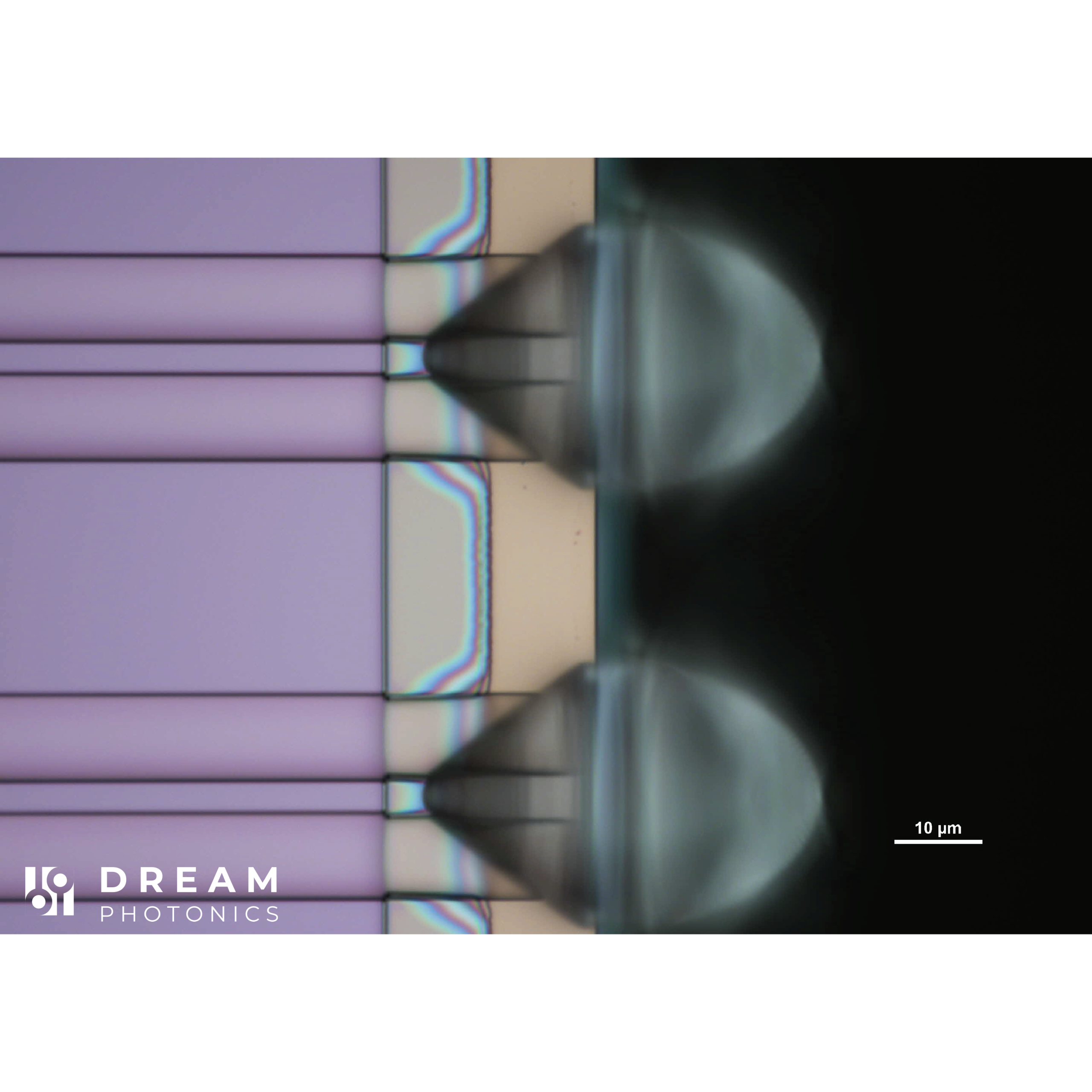
At UBC, this problem is being transformed into a massive competitive advantage. UBC spinout Dream Photonics has engineered a proprietary platform called PICTOR that replaces painstaking mechanical assembly with custom 3D-printed lenses.
Instead of demanding sub-micron placement accuracy, PICTOR allows components to be placed roughly using standard high-throughput factory equipment. The system then measures the exact offset of each component and 3D-prints a custom, micro-optic lens directly onto the chip to correct the alignment error. Think prescription eyeglasses, but engineered for semiconductor chips. By moving precision from slow mechanics into high-speed printing, Dream Photonics is unlocking the scalable assembly method that photonic hardware urgently needs.
Proving the Platform
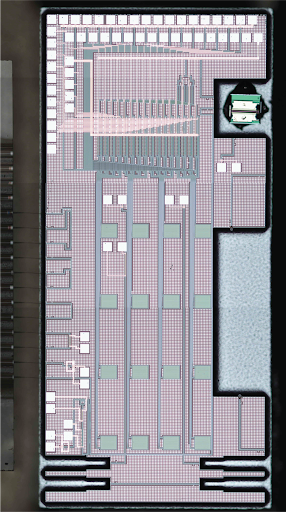
What They’ve Done: Dream Photonics has proven its PICTOR platform on silicon test chips fabricated by global foundry Tower Semiconductor. Rather than relying early on venture capital, the team bootstrapped profitably for five years—generating roughly $5 million in revenue and grants across 40 commercial customers.
In May 2026, the startup received $1.17 million from PacifiCan to establish Canada’s first domestic pilot production line for adaptive optical interconnects. Backed by a new $4.5 million pre-seed round, Dream Photonics has bolstered its leadership team with key executive hires, including VP Product Mike Jackson and VP Corporate Development Gabe Kalmar, to prepare for rapid manufacturing deployment.
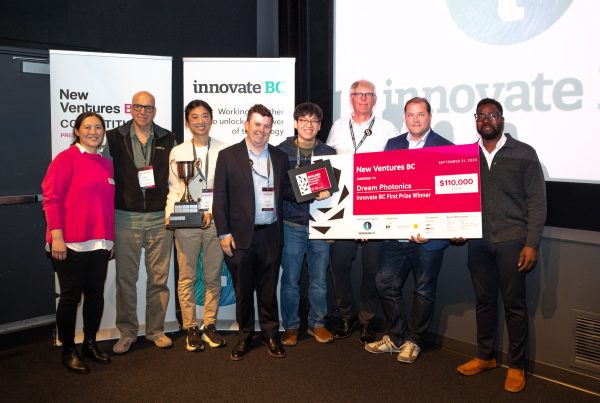
Why NVBC: The 2026 New Ventures BC Competition, presented by Innovate BC, forced the leadership team to translate complex optics into an investor-ready business strategy. Defending their plan against expert reviewers helped them pinpoint the exact market layer PICTOR serves within the broader AI boom. It has also opened doors to experienced local hardware leaders who bring practical scaling and manufacturing expertise
Up Next: The short term has Dream Photonics focused on taking its validated technology directly onto customer factory floors. The team is raising a $10 million USD seed round to build out its Vancouver pilot line and hit three core benchmarks: cutting optical signal loss below 1 dB on customer parts, passing Telcordia reliability standards, and printing 10 times faster than old alignment tools. Securing their first paid pilot deployment with a contract manufacturer will unlock the category for widespread commercial rollout.
Moving Beyond the Service Trap
Building a deeptech company requires knowing when to shift gears. For five years, Dream Photonics operated as a profitable engineering service provider, allowing the founders to maintain majority ownership, understand customer needs, and build a portfolio of five patent families.
But scaling a true manufacturing platform takes a different kind of speed and capital. Realizing that service work tied their growth to individual client timelines, the leadership team pivoted from custom consulting to a scalable hardware platform. Bootstrapping builds early discipline—provided founders recognize the moment the revenue model keeping them alive starts slowing them down.
Meet The Team

Lukas Chrostowski
CEO & Co-FounderRead More
Sudip Shekhar
CTO & Co-FounderRead More